College
-
Back-to-School Transitions: Helping Neurodivergent Students Prepare for Change

When I was a girl, I prepared for the first day of school with a trip to the store for a Day Keeper planner and a fresh set of markers. This was a very special occasion because I have always had a weakness for office supplies. Give me a stack of glittery Post-it Notes, and…
-
The Skills They Don’t Teach in the Classroom

When my son graduated high school, he wasn’t ready for college — and we knew it. Instead of moving into a dorm that fall, he spent the next three years in an 18-to-21 transition program, splitting his time between community college classes and a curriculum most schools don’t offer: real life. His teachers, outside therapists,…
-
Why So Many More Autistic Students Are Going to College—And Why Many Colleges Aren’t Ready
More autistic students than ever are enrolling in colleges and universities across the United States. Recent research suggests that nearly half of autistic high school graduates now pursue higher education—a dramatic increase from just a decade ago. A new study from Michigan State University estimates that roughly 280,000 autistic students are currently enrolled in U.S. colleges…
-
Which Colleges in New Jersey Offer Extra Help for Neurodivergent Students?
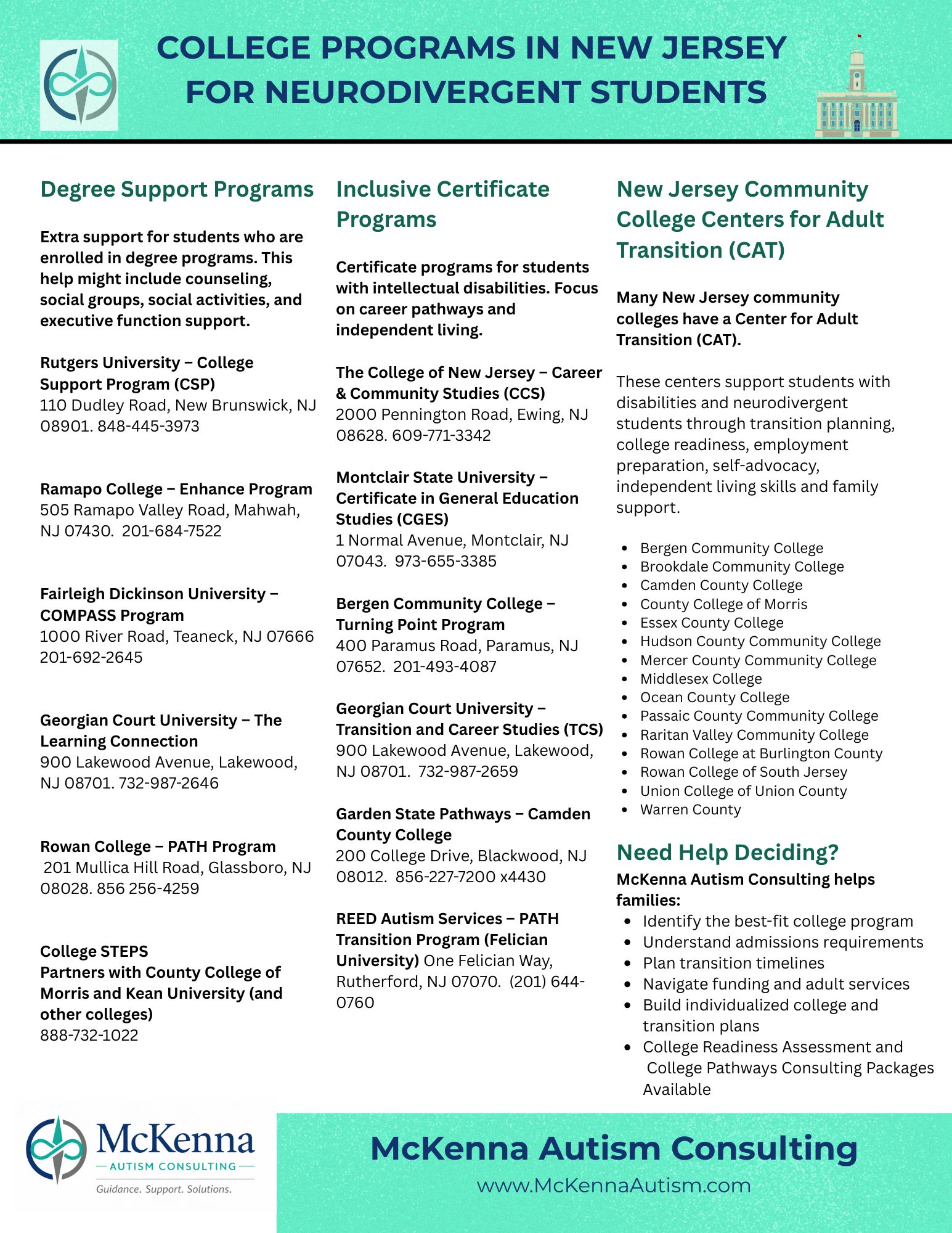
Every college offers basic accommodations for students with disabilities, including extra time on tests and a quiet testing room. Students must apply for those accommodations through the college’s Office of Disability Services several months before school begins. Remember, colleges only offer accommodations, not modifications of the curriculum. Some neurodivergent students have the academic skills to…
-
Different Students, Different Paths

Last week, I attended the Independent Education Consultant Association (IECA) annual conference in Baltimore. Despite the financial woes at many colleges and the poor employment prospects for college grads, the conference was uplifting. We heard several inspirational presentations about how consultants should help students find paths that work for them, rather than trying to appease parents…
-
Transition Timeline (Downloadable Flyer)
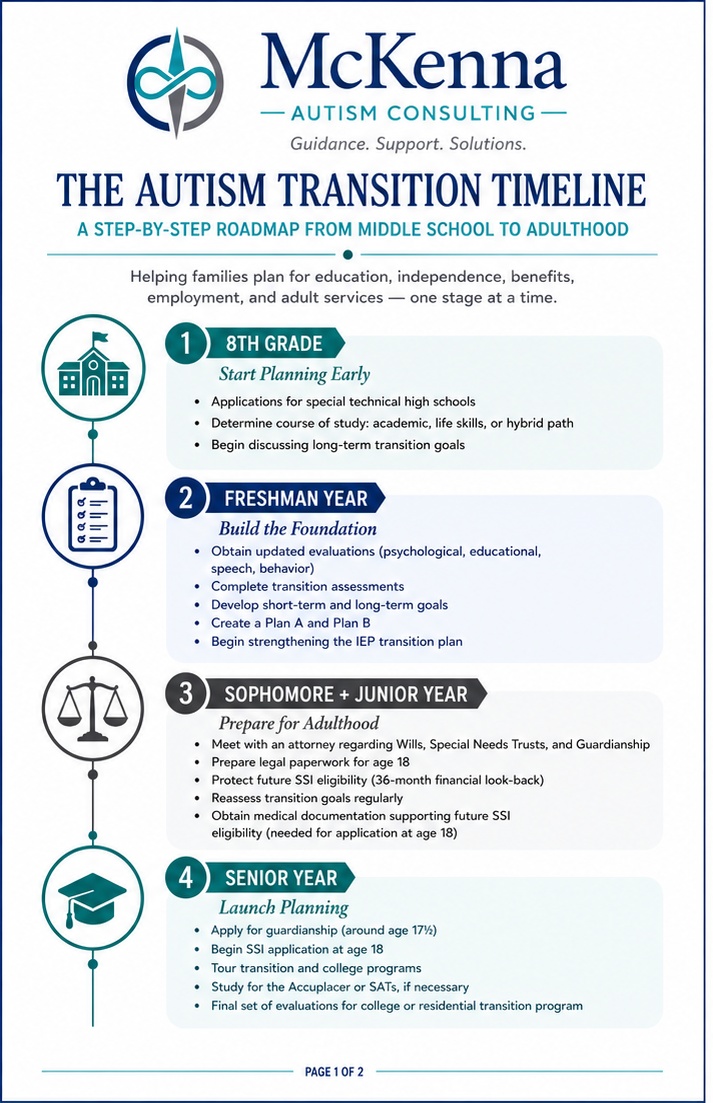
The transition from high school to adulthood is a multi-step process. Ideally, the process should start in the 8th grade. Download our handy two-page flyer with a timeline to keep you on track.
-
Are There IEPs in College?

IDEA, the federal legislation that guides public education for students with disabilities, only protects students in public education. Once your student graduates and leaves the public school system, either at age 18 or 21, those protections end. IDEA is a powerful set of laws that safeguards our children. Prior to its passage in 1975, schools…
-
Can My Child Receive Government Support AND Attend College?

My favorite path to college for young autistic adults — though certainly not the only one — is to attend an 18-21 transition program after high school, and then go to college. I like transition programs because they are a free way for your student to retain the benefits of IEPs, polish social skills, and get job training.…
-
What is the most important skill for success after high school?

Some kids leave high school ready to thrive in college or work. Others take longer to find their purpose. They fail classes. Maybe they get fired from a job. They live at home, dependent on their parents for funds and transportation. Disabilities, including autism, might interfere with success. Some kids lack academic skills or the…