
When my son was a senior in high school, I thought I knew everything. I had been the mom on every special ed PTA committee. I had a PhD. And I still felt completely unprepared for what came next.
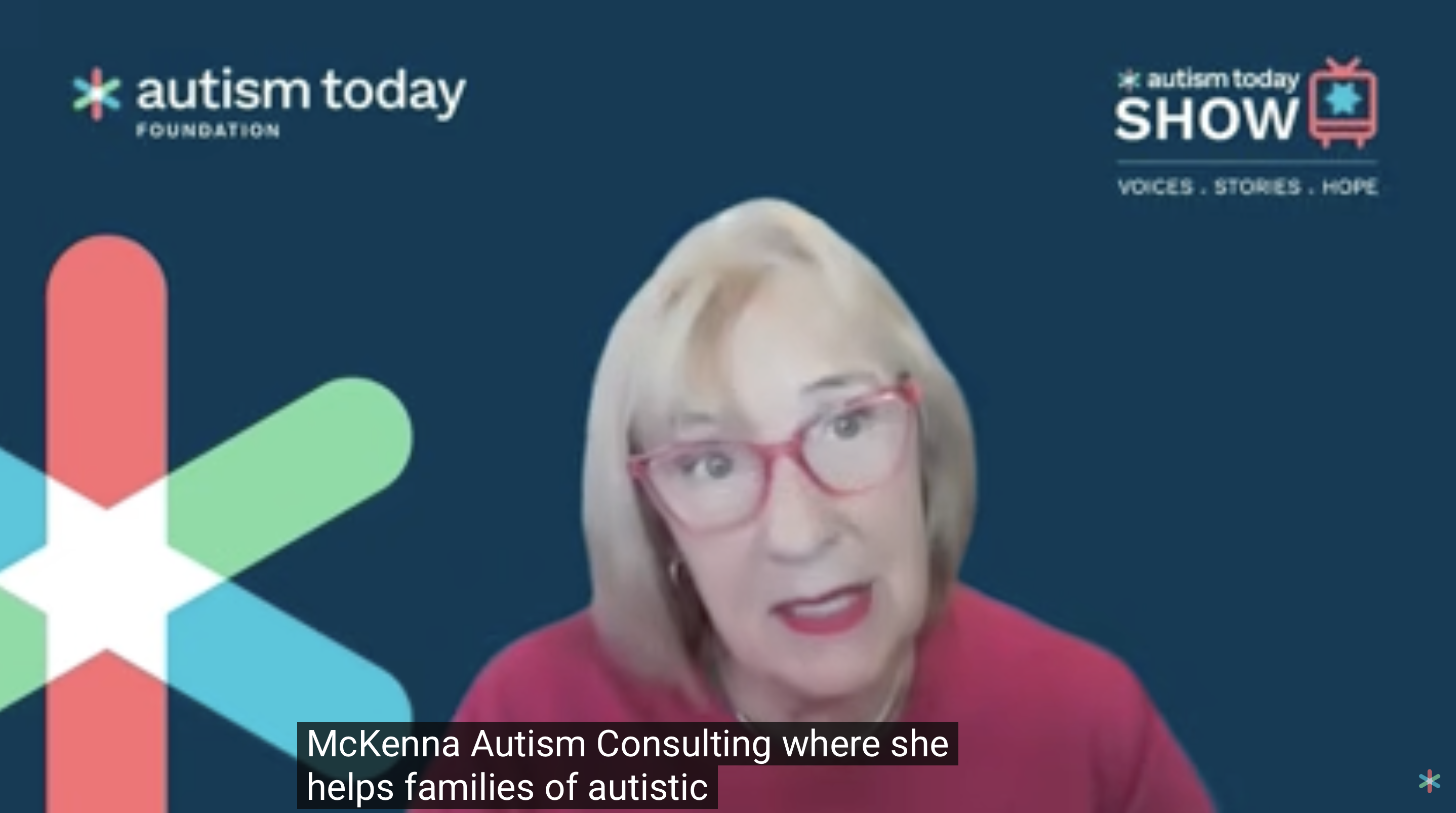
I had to learn a whole new vocabulary and figure out what the options even were. That experience is why I do this work today, and it’s what I talked about with Karen Simmons on Episode 2 of The Autism Today Show.
Here are the big ideas from our conversation.
Why the transition is so hard
In high school, the supports are built in. Your child knows what happens from 9 to 3 every day. Then, at 18 or 21, many families describe it as falling off a cliff.
Suddenly parents have to become case managers for a fragmented, complicated system. In the U.S., every state does it differently, and there’s a whole new alphabet soup to learn: DVRS, DDD, SSI. It’s emotionally hard, too. Our friends are sending their kids off to Georgetown or Fordham, and our family is on a different path. Underneath it all is the fear every parent carries: what happens when we’re not around?
Start earlier than you think
I recommend families start thinking about transition when their child is as young as 14. Many of the skills that matter most aren’t taught in school.
Some of my clients are taking AP Calculus but can’t wake up on their own in the morning. College and adult readiness depend on real-life experience: walking the dog, having chores, getting up independently, walking into town alone. Sometimes we have to push our kids out the door a little so they can have those adventures and learn from them.
Build a path around your child
Start with the essentials every family needs to consider, like guardianship and a special needs trust. Then look closely at your child. What are their strengths? What do they love? What do they want to do, not just what we want for them?
I recently talked with a young woman with a very high IQ who works in the bakery of her local supermarket, and she loves it. It’s a kind environment that keeps her anxiety in check. It took time for her, her family and the system to find that path. Our kids may not know exactly what they want at 18 or 21, and that’s okay. Autism is often a developmental delay, and sometimes they just need more time.
Concrete steps for families
- Have a Plan A and a Plan B. Plans change, and that’s fine.
- Build a safety net. Even for academically strong students, I want every family on board with government benefits, so there’s a backup if things don’t work out.
- Make it a team effort. Bring together your child, the school district, the 18-to-21 program and private providers like ABA agencies. The parent can be the convener.
- Make school goals match real goals. If your child wants to work in a bakery, the school should be teaching the skills to ace that job, like making change.
- Look at your community college. It’s local, affordable, and friendlier to neurodivergent students than ever before.
- Prioritize work. A job of any kind builds self-esteem and teaches things a classroom can’t.
- Organize your paperwork. It’s boring, but you’ll need PDFs of every evaluation when you apply for services.
My four takeaways
- Plan early. Every family’s plan looks different, but start the process early.
- Be creative. What works for one child won’t work for another. Keep your options open.
- Find your sherpa. Find someone who has climbed the mountain before: a consultant, a social worker, or a parent a few years ahead of you. A guide shortens the learning curve.
- Enjoy the ride. Autism is a lifelong condition. You’ll always be learning, and we can’t be too hard on ourselves for not knowing everything.
Watch the full episode
Karen and I also talked about the grief many parents feel at diagnosis and again at the high school years, and why it’s never too late to get help. One mom recently came to me when her son was 29, a college graduate who had never been connected to services.
Watch The Autism Today Show, Episode 2, on YouTube
Thank you to Karen Simmons and the Autism Today Foundation for having me.
Need a sherpa?
If you’re ready to map out your own child’s next steps, book a free 30-minute intake call with me. You can also join one of my free webinars or sign up for my newsletter at McKennaAutism.com.
Laura McKenna, PhD, is the founder of McKenna Autism Consulting.